Home
Home  Navigation


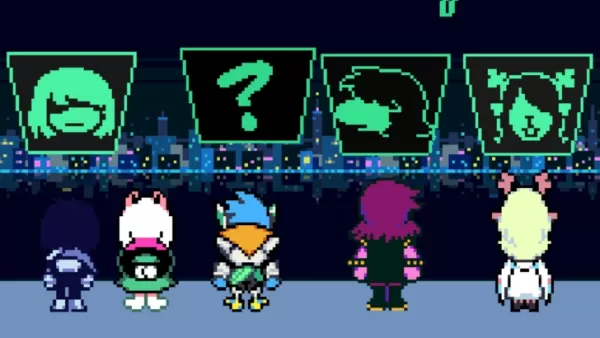
DELTARUNE fosters a culture of nonviolence not through rigid morality systems, but by crafting a world that responds to compassion. Discover how sparing enemies enriches Castle Town, deepens character arcs, and shapes the emotional fabric of your journey.
← Return to DELTARUNE main article
Deltarune’s Quietest System Is Its Most Powerful
Why Sparing Matters
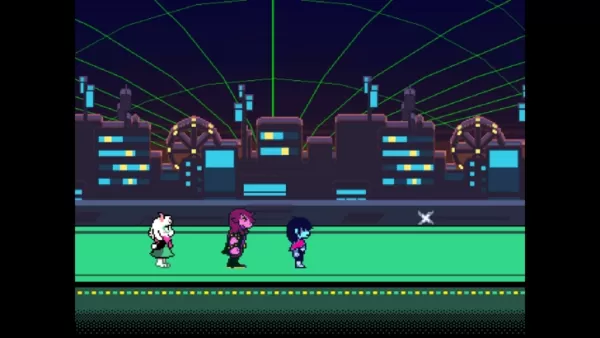
At first glance, Deltarune appears indifferent to moral choices. There’s no "Pacifist" or "Genocide" label guiding your path, no explicit endings condemning or praising your actions. Unlike Undertale, the world doesn’t fracture or reset based on violence. There’s no scoreboard tracking your kills—no overt judgment at all.
Yet kindness is far from absent. Instead, it’s woven into the game’s foundation—emotionally, structurally, and narratively. The monsters you spare don’t just vanish. They remember you. They return. They rebuild. They open shops, perform music, decorate streets, and breathe life into Castle Town, transforming it from a quiet outpost into a vibrant community. If you choose not to spare them, the town remains hollow. The silence lingers. The world feels smaller.

Mechanically, sparing is a blend of observation and empathy. Use the ACT command to address an enemy’s emotional state, or wait for their HP to drop below 50% so Ralsei can cast Pacify. Each battle becomes a puzzle—one that rewards patience and understanding over aggression. And when you succeed, the impact extends far beyond the fight.
Some spared enemies, like Maus or Poppup, return as background residents with minimal dialogue. But others evolve in meaningful ways. They don’t just survive—they thrive. They speak, create, connect, and become part of your story. Deltarune never labels a "pacifist route," but it shows you one: through bustling streets, warm interactions, and a town that grows because you gave it a chance.
Sparing isn’t about unlocking a better ending. It’s about building a fuller world. And that world is waiting to grow—if you let it.
Gentle Choices, Gentle Consequences
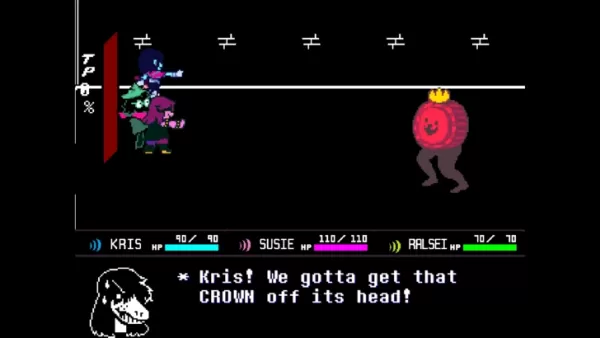
Chapter 1 introduces the core tension between force and empathy. From the start, Ralsei—gentle prince of the Dark—guides you toward kindness. Each battle is a mini-puzzle: attack, or observe and respond with ACT commands to defuse hostility. When enemies tire, Ralsei can pacify them. Succeed, and you don’t just win—you resolve.
Unlike Undertale, there’s no XP for defeating enemies. Strength doesn’t come from combat. Choosing to spare doesn’t slow your progress—it simply offers a different reward: connection. The game never punishes you for fighting, but it gently encourages restraint through design, tutorial cues, and battles that favor cleverness over brute force.

The following paragraph contains spoilers for Chapter 1.
The true impact of sparing reveals itself at the climax. When the King of the Card Castle overpowers your team, victory doesn’t come from strength. It comes from mercy. The monsters you spared rush in—not to fight, but to stand together. They confront their tyrant not because you commanded them, but because you showed them kindness. Their rebellion is peaceful, powerful, and entirely player-driven.
This leads to a hopeful ending. You’re not forced to flee. Instead, you get to say goodbye—to Lancer, Hathy, Rudinn, and others you’ve met. There’s closure. There’s warmth. A quiet message: your choices mattered.
In contrast, if you defeat enemies, the ending is abrupt. The townspeople still arrive, but they attack chaotically. Ralsei must forcibly pacify the King. There’s no farewell. No reflection. Just escape. Even without moral labels, Deltarune makes it clear: kindness isn’t just an option. It’s a force.
Sparing As World-Building
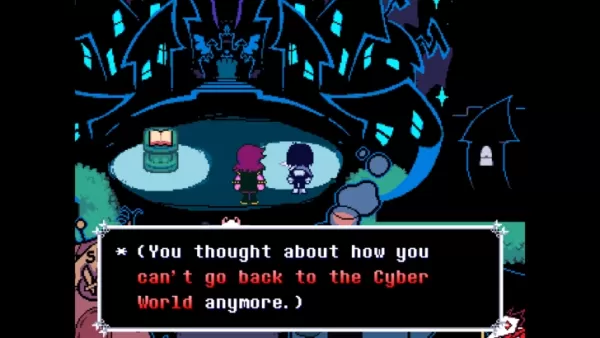
Chapter 2 elevates sparing from a personal choice to a structural mechanic. After sparing enough enemies, they begin to return to Castle Town. There’s no counter, no checklist—just gradual transformation. The more you spare, the more the town comes alive.
Former enemies become shopkeepers, decorators, comedians, musicians, and neighbors. Castle Town evolves into a living community, shaped by your empathy. This isn’t a one-time reward—it’s ongoing. The world changes between chapters, carrying forward the consequences of your actions.
Even Queen’s arc mirrors this theme. Once a controlling ruler of the Cyber World, she grows into someone who learns to trust and let go. If none of her citizens return, she searches for them in silence, retreating to her room in quiet disappointment—a rare moment of vulnerability that underscores the emotional weight of your choices. By sparing her people, you embody the same lesson she learns: respect, not control.
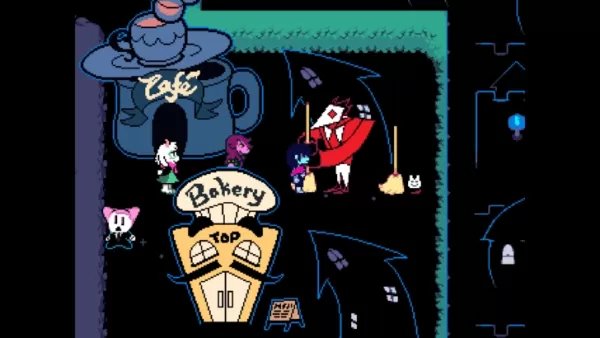
Castle Town is more than a hub—it’s a reflection of your journey. The more you engage with empathy, the richer the world becomes. Colors feel brighter, dialogue more expressive, silence less heavy. Minor characters gain unique lines, shops unlock new items, and music shifts based on who you’ve spared. These aren’t power-ups. They’re emotional rewards—proof that your kindness left a mark.
If future chapters continue this design, your past compassion could shape the story in ways we’ve yet to see. Every spared enemy might carry forward, not just as a memory, but as a builder of what comes next.
Notable Recruits

While not every enemy has deep consequences, several stand out for how their presence evolves when spared. These encounters show how much personality and narrative depth can emerge from a single act of mercy.
Sweet Cap’n Cakes
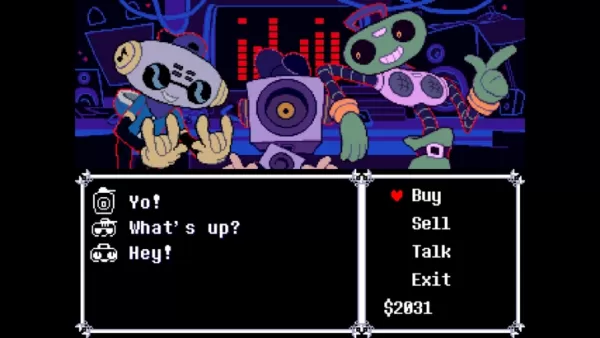
This energetic musical trio from the Cyber World resists violence—literally healing faster than you can damage them. Fighting them is futile. Choosing nonviolence turns the battle into a rhythm-based dance-off. When spared, they later open a shop in Castle Town, playing unique tracks based on how many monsters you’ve recruited. Their entire existence reinforces the game’s central theme: harmony through understanding.
Tasque Manager

A composed and commanding presence, Tasque Manager leads her team with discipline and flair. If one of her Tasques is defeated, she becomes enraged, making sparing harder. She responds to respect—especially during her quiz encounter. Answer all questions correctly, and she’ll spare immediately. Her demeanor softens when met with order and courtesy, showing that even authority can be moved by empathy.
Werewerewire
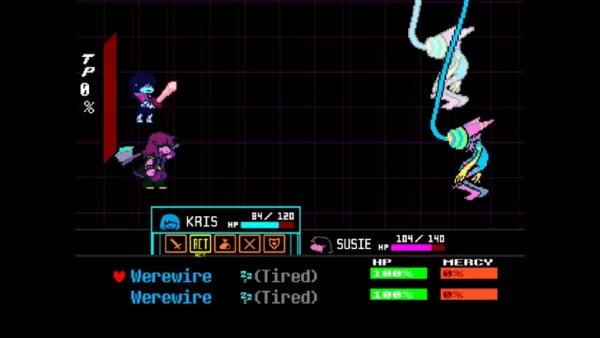
These electric beings react aggressively to violence. Using ACT commands like BeSweet or BeTough gradually lowers their hostility. One memorable line when choosing BeSweet reads: "You and Ralsei whispered sweetly to Werewerewire! It pretended not to care, but ACTs became more effective!" This small moment reveals a softer side, proving that even the fiercest foes can respond to kindness.
These examples highlight how Deltarune turns combat into connection. Sparing isn’t just mechanics—it’s storytelling. Each peaceful resolution adds depth, dialogue, and meaning, reinforcing empathy as a core gameplay pillar.
Choosing Kindness In A World That Remembers

The enemies in Deltarune aren’t mindless foes. They’re expressive, anxious, theatrical, and deeply human in their quirks. Sparing them doesn’t feel like a moral obligation—it feels like an invitation. You learn who they are, what they fear, and how they relate to one another. Choosing ACT is choosing to listen. Choosing to spare is choosing to make space for them in your world.
It’s never just about surviving a battle. It’s about who you bring with you afterward. From Castle Town’s shops
 Latest Articles




 Latest Games

![Chubby Story [v1.4.2] (Localizations)](https://imgs.xddxz.com/uploads/85/1719638042667f981a5e9f8.jpg)


![Zia – New Version 0.4 [Studio Zia]](https://imgs.xddxz.com/uploads/47/1719569268667e8b74e6004.jpg)